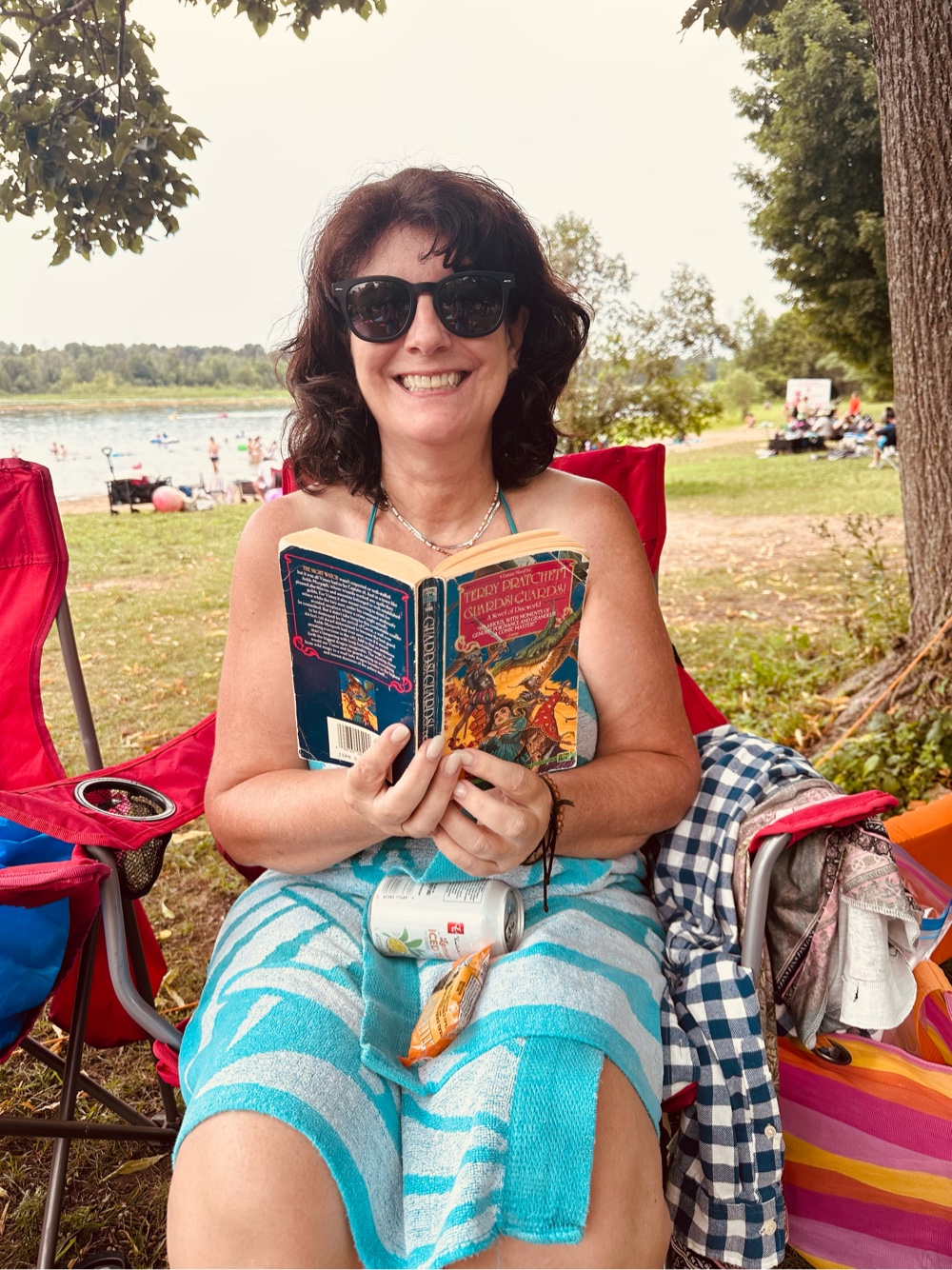
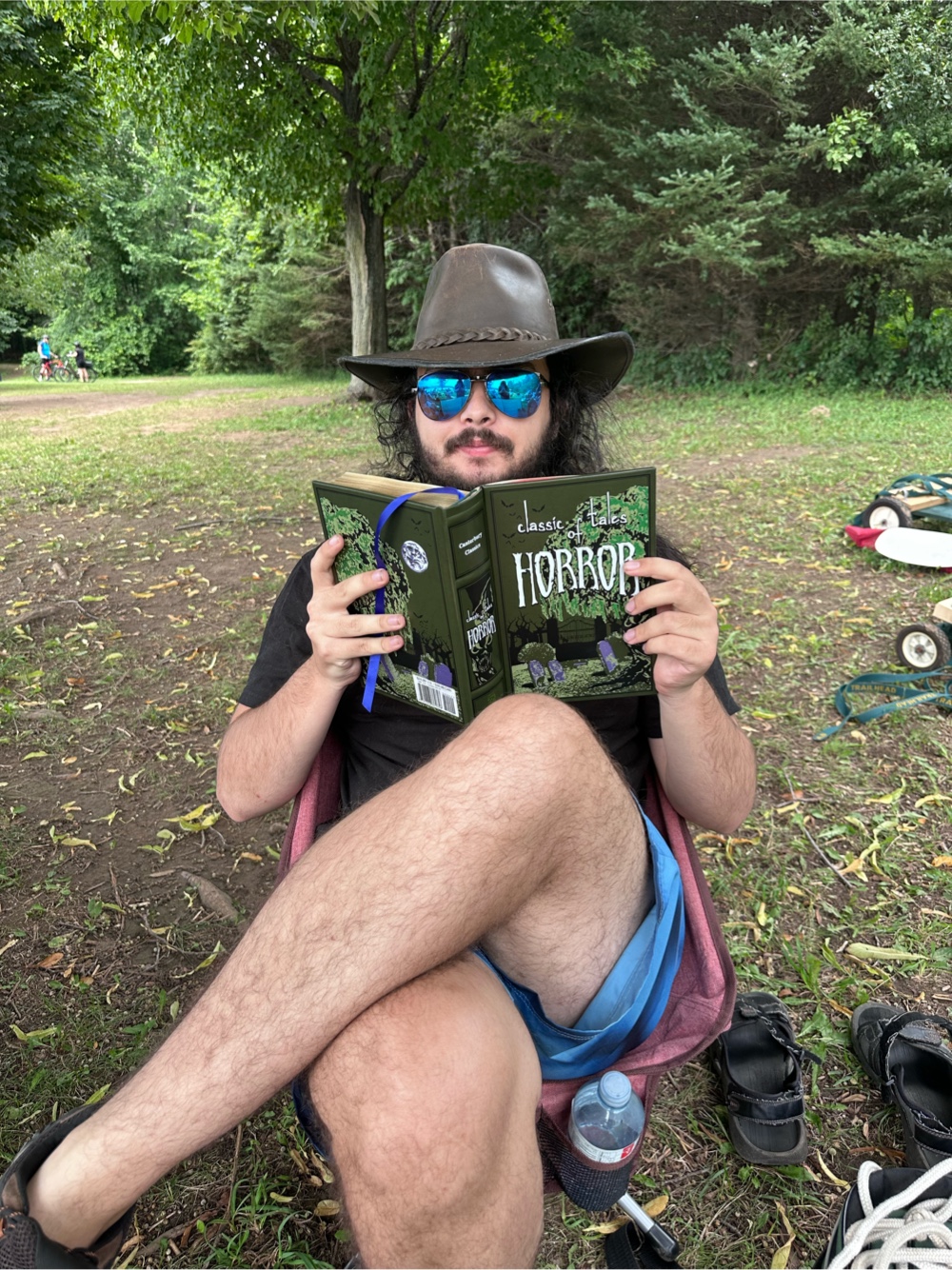
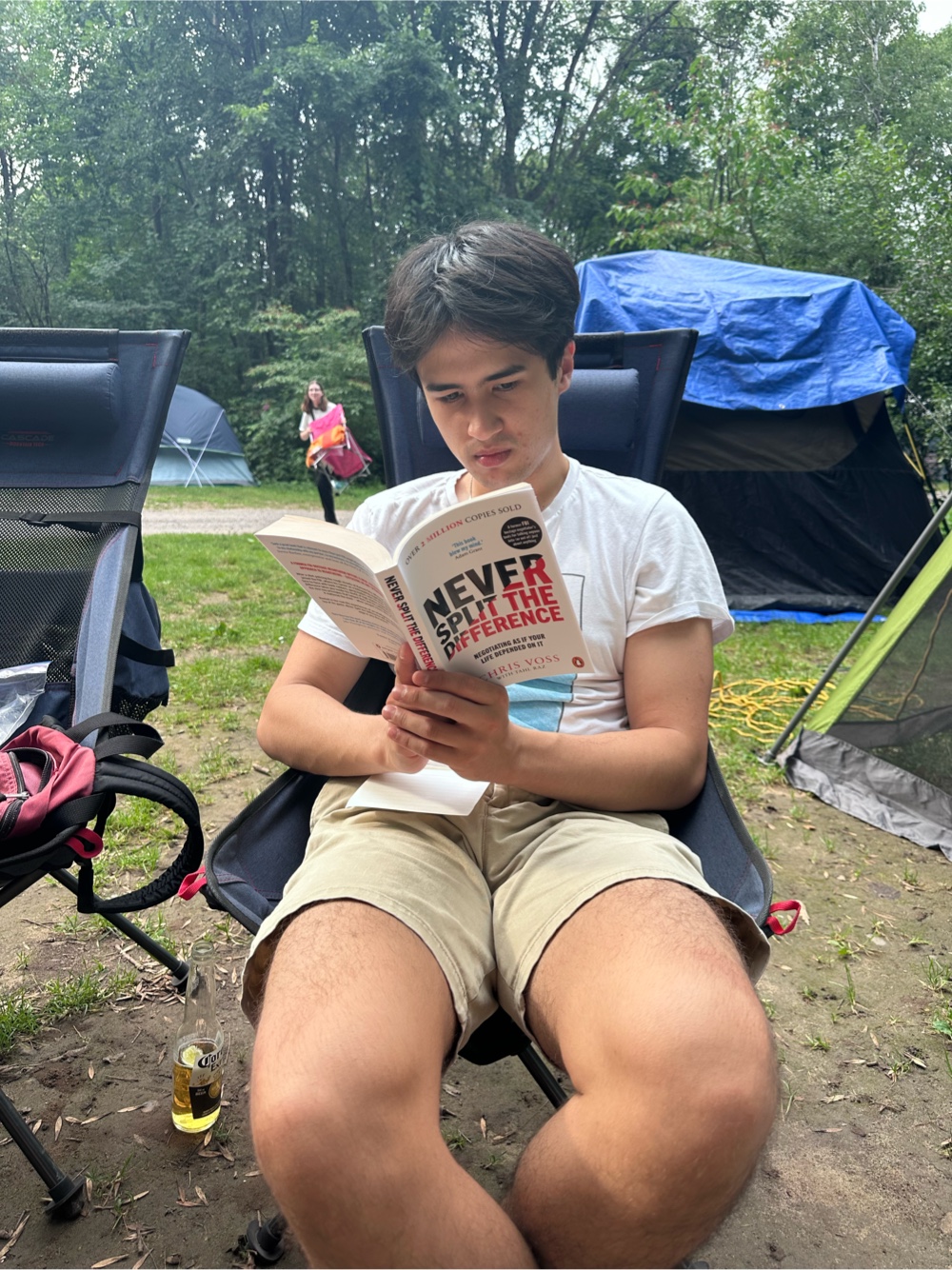
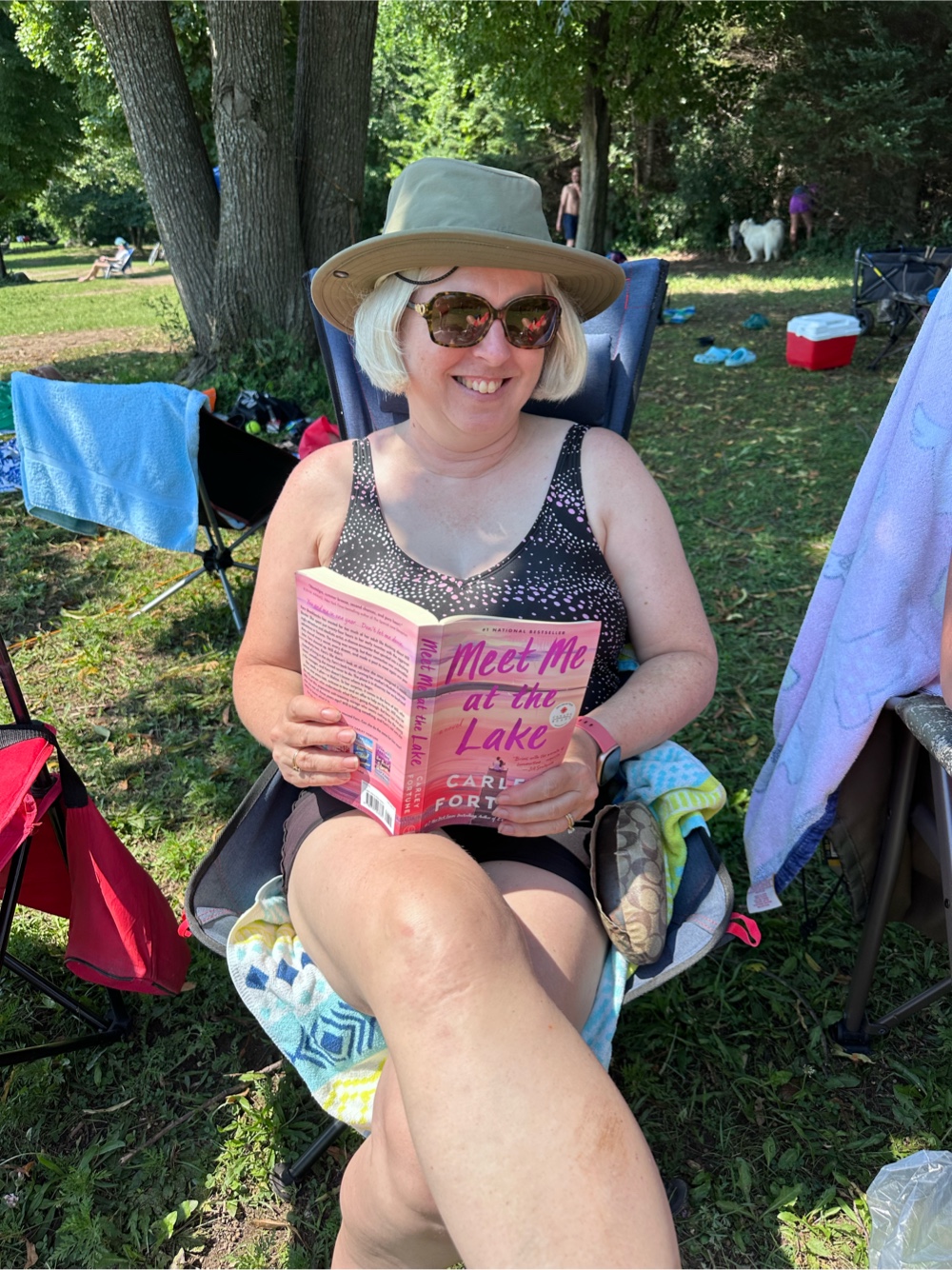
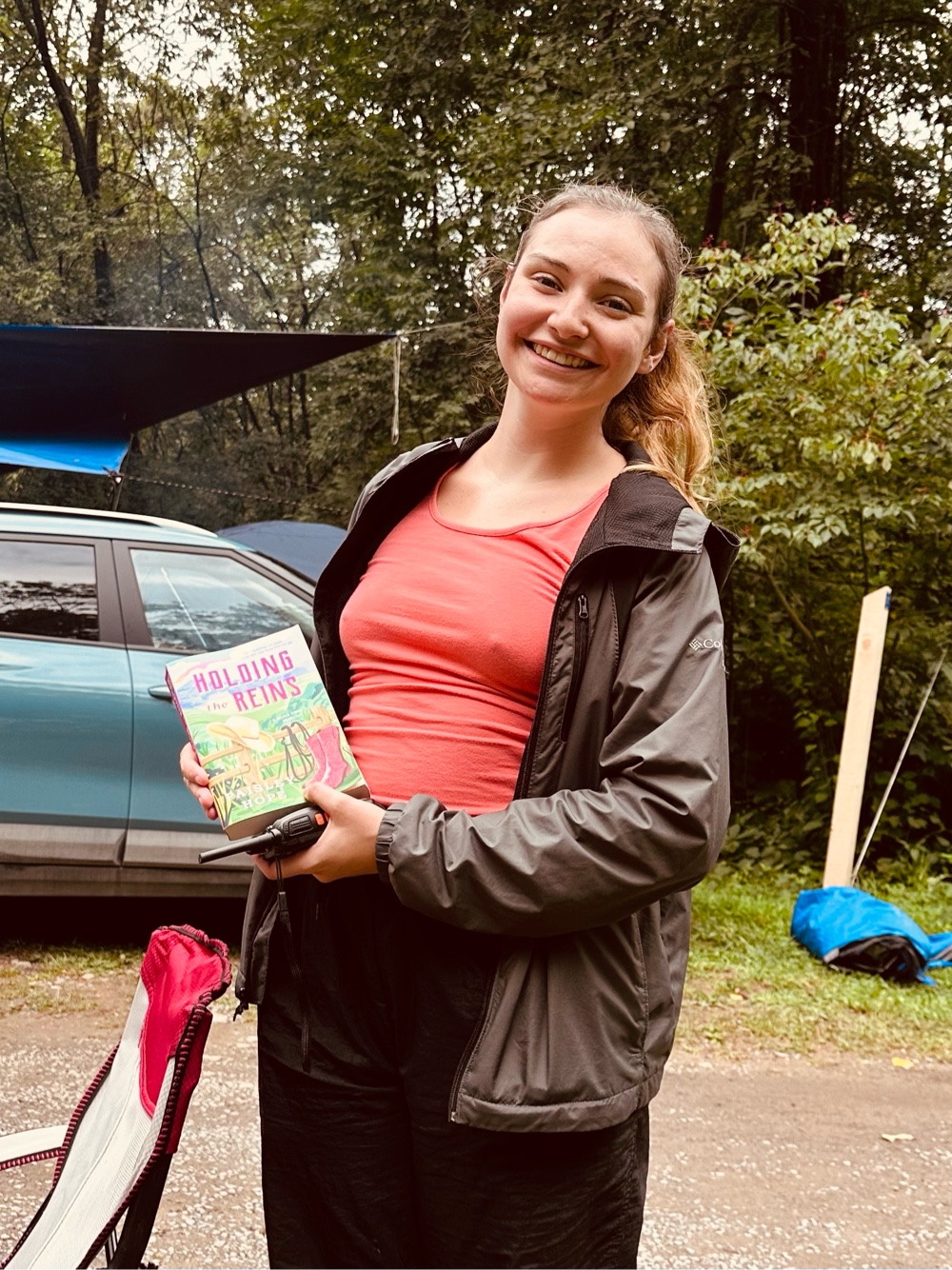
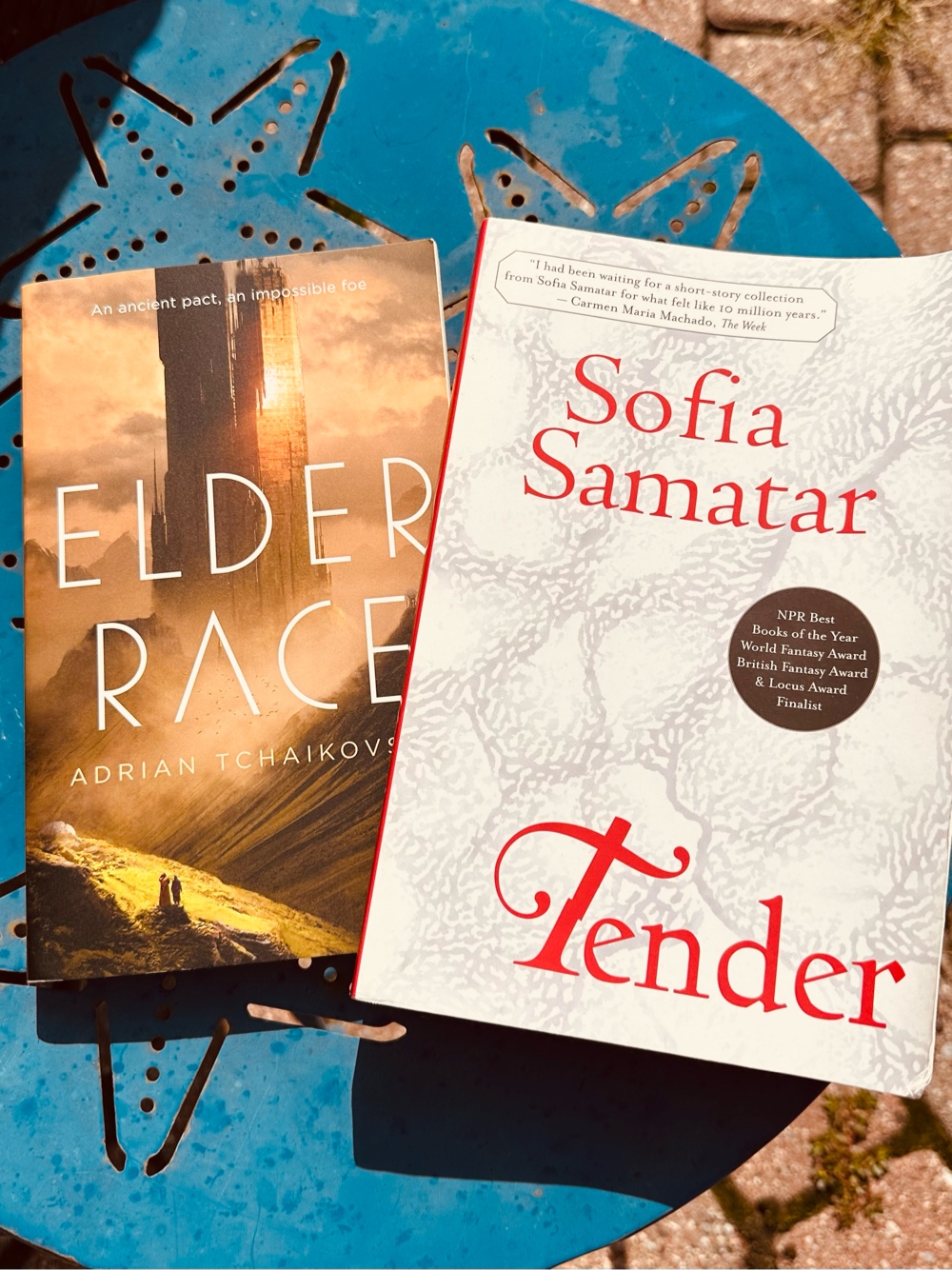
I think I had an epiphany last night. I mean, can an epiphany be a re-realization of something that you've known is true for years, if not decades, but didn't REALLY realize until the present moment? If you go by me actually starting to DO yoga instead of just knowing that yoga would be a really good thing to do, yes.
So I was starting a book from my still giant triple pile of library books on the table at the foot of my bed. It was Your Name Here by Helen DeWitt, a "major literary even two decades in the making", a "book of unparalleled scope and vision", a "spectacular honeycomb of books within books". It references Italo Calvino's If On a Winter's Night a Traveler many times in the first fifty pages, and is also compared to it in the synopsis. I was fascinated by the Calvino work in grad school when I was discovering experimental narrative techniques and felt like they were unspeakably edgy and bold. Many many years and books have gone by since then, and I realized as I read that I was not finding this book 'wondrous and unique' but rather confusing and tiresome. And I suddenly thought.... 'nope.'
It's January. It's still dark by five o'clock. I still have 47 library books out. I have said in at least TWO blog comments that I should make a goal of DNF-ing books that don't delight me this year.
I DNF-ed that shit, bitches!
Then I picked up a book I had started the night before, If You Love It, Let It Kill You by Hannah Pittard. a "dishy work of auto-fiction". It's about a woman who is a writer and has put people she knows in her books, and then she finds out that her ex-husband, also a writer, has put an unflattering version of her in his book. They all live in Lexington, Kentucky, where the author of this book also lives. Oh wait, it gets better. This novel features a writer whose husband slept with her dear friend - and this author also wrote a memoir about her husband sleeping with her dear friend. What the actual whole entire....
I don't love when authors write "fiction" that might not be, or when they cleverly blur the boundaries between fiction and non. I wasn't hating it, but it sort of read like the amazing Catherine Newman book I read this year (was it two?) except slightly more forced and less warm.
NOPED out of that one, too. TWO. TWO DNeffs. I think I might be a bona fide DNeffer. I was giddy with liberation! What if I just... only read books that I feel excited about reading? At least for this month? WHAT A REVOLUTIONARY CONCEPT.
Last three-star post!
YA
Perfect Girl by Tracy Banghart: Synopsis from Goodreads: Jessa has been raised to be the “perfect girl.” She is unfailingly polite, never rocks the boat, and always follows the rules―no matter what. Her friends love to give her a hard time for being such a goody two-shoes, but Jessa likes it this way. She knows what's expected of her, and she's happy to be the person her parents (and society) want.
When a freak storm takes out the power during a sleepover at Jessa’s creepy, old house, things go south before the pizza gets cold. Her friends are at each other’s throats, unexpected guests keep showing up (some more welcome than others), and it’s not just her brother serving up jump scares. A killer looking for the perfect girl has targeted Jessa, and she’ll have to reject everything she’s been taught if she wants to keep herself―and her friends―alive until sunrise.Who knew perfection could be so dangerous?
-”Jessa was tired and kind of annoyed she’d even come out – Heartstop Suckers was her favorite band, but she could barely hear them, and her friends had already ditched her for two older guys whose idea of sexy banter was to scream about how much their trucks could tow.”
The first bit of this was okay. I was precisely this kind of teenager, and parents who expect perfection from their daughters while making excuses for their sons is eminently believable (I had a sister - she was really smart and talented but we didn't overlap in a lot of areas so competition wasn't really a big problem) When shit hits the fan, it's just beyond belief how Jessa, who until now was on edge, overlooks every red flag and thinks up a stupidly harmless reason for every twist. Also, can you imagine going through elementary and high school with a last name like Banghart? I'll bet literary criticism bounces right off this chick.
We Are Villains by Kacen Callendar: Synopsis from Goodreads: From bestselling and award-winning author Kacen Callendar comes a thrilling, dark academia YA about murder, blackmail, and the one person determined to discover the truth, no matter the costWhat happened to Arianna Reynolds?
Ari’s death was ruled an accident, but for her best friend Milo, it’s shrouded in mystery. Why was she in the woods on the night of the fire? Had she been alone? Figuring out what happened the night Ari died is the only reason Milo returns to Yates Academy, even knowing he’ll be in constant danger. . .Liam is the King of Yates, a role he keeps hold of through his family’s old money—and the threat of violence. So when he begins receiving ominous letters from another student accusing him of murdering Ari, the suspect list is long. Desperate to prove his innocence before the accusation ruins his reign, Liam enlists Milo’s help to find the blackmailer. But the more Milo helps Liam, the more he becomes certain that Liam has something to hide.
As Milo comes closer to the truth, he uncovers secrets that everyone wants to keep buried . . . Featuring a cast of queer characters of color, We Are Villains is an electrifying mystery that will keep readers guessing.
”’So why are you here?’ I ask. ‘Same fortnightly reason?’
His eyebrows make a flat black line. ‘You would say fucking ‘fortnight.’
‘You can take the boy out of the theatre, or something like that.’”
-”As they rose from the water their fingertips dripped and the fabric clung so closely to their bodies that I could tell who was who, though their faces remained downcast. On the left, Fillippa, her long legs and slim hips unmistakable. On the right, Wren, smaller and slighter than the other two. In the middle, Meredith, her curves bold and dangerous under the thin white shift.” (sigh)
Long Time Gone by Hannah Martian: A family goes to drastic lengths to protect their version of the truth, in this dual timeline rural debut mystery perfect for readers of Kelly J. Ford and Hayley Scrivenor.In the small town of Wonderland, Wyoming, the truth is whatever the Coldwater family says it is. When their prodigal daughter Jessica was murdered forty years ago, their truth was that Holly Prine killed her–regardless of Holly’s innocence.
But the Coldwaters aren’t the only reason private investigator Quinn Cuthridge hasn’t set foot in the town in nearly a decade. After her aunt sent her away when she was a teen, Quinn swore she’d never return. When she gets an unexpected call from her aunt’s ranch hand, Hunter, Quinn learns that her aunt has gone missing. Reluctantly, she returns to Wyoming to investigate and soon realizes that her aunt was getting dangerously close to long-buried Wonderland secrets, including who really murdered Jessica Coldwater.As Hunter and Quinn dig into what lies in the Wyoming backcountry, attraction flares between the two women, complicating their investigation–and Quinn’s steadfast refusal to have any ties to Wonderland. With someone threatening Quinn and her own dark past echoing in the present, Quinn must struggle against her hometown and herself to find the truth in this rich queer mystery.
-”’What’s the dress code?’
‘The what?’
‘Dress code,’ I repeat. ‘Formal, semiformal?’
‘It’s… your good jeans and a nice shirt.’
Goddamn Wyoming. ‘Of course it is.’”
Three and a half. As a thriller this veered a little too close to a romance for my taste. As a YA queer story - past and present - it is just fine. I don't think it is rated as YA, but the two female main characters are in their early twenties, so new adult would be fitting. I don't have a huge love for the enemies-to-lovers trope or the main characters spitting insults at each other while clearly gathering a magnificent head of sexual tension, but a lot of people do, and if it works for hetero romances, who am I to deny it to queer ones? I am all for Hannah Martian putting out more very gay books.
Out of Air by Rachel Reiss: Synopsis from Goodreads: Phoebe “Phibs” Ray is never more at home than when she’s underwater. On a dive six months ago, she and her four closest friends discovered a handful of ancient gold coins, rocketing them into social media fame. Now, their final summer together after high school, they’re taking one last trip to a distant Australian island to do what they love most – scuba dive.
While diving a local reef, Phibs discovers a spectacular underwater sea cave, rumored to be a lost cave with a buried treasure. But when Phibs and her best friend Gabe surface from the cave, they notice that they're undergoing strange changes. Oozing gashes that don’t heal. Haunting whispers in their heads... Something has latched onto them, lurking beneath their skin, transforming them from the inside out.When treasure hunters arrive, desperate to find the location of the cave and hold Phibs’ group for ransom, she’ll do anything to keep her friends safe. In the process she learns that, of all the dreadful creatures of the sea, she might be the most terrifying of them all.
-”A lionfish faces us, hovering like a neon stop sign. White bands stripe its head and body, while its fin rays ripple like a worm. It’s beautiful but dangerous. As Isabel loves to remind us, poison runs deep in its dorsal spines, similar in toxicity to a cobra’s venom.
It’s a reminder that danger lurks everywhere. In the creatures, the invisible current, the powerful surges. But it’s also inside me. If I breathe too fast, sink too low, lose track of my depth. I have to stay alert.”
Solid debut thriller with supernatural elements. The scuba-diving scenes were perfect. A lot of younger readers seem to be preoccupied with how this book does or does not resemble a tv show called The Outer Banks, but you know me, I'm always up for an eldritch horror or a sea demon/haunted coin deal that begins to cause metamorphoses in the bodies of the treasure hunters.
The Dead House by Dawn Kurtagich: Synopsis from Goodreads: Twenty-five years ago, Elmbridge High burned down. Three people were killed and one pupil, Carly Johnson, disappeared. Now a diary has been found in the ruins of the school. The diary belongs to Kaitlyn Johnson, Carly’s identical twin sister. But Carly didn’t have a twin . . .
Re-opened police records, psychiatric reports, transcripts of video footage and fragments of diary reveal a web of deceit and intrigue, violence and murder, raising a whole lot more questions than it answers.Who was Kaitlyn and why did she only appear at night? Did she really exist or was she a figment of a disturbed mind? What were the illicit rituals taking place at the school? And just what did happen at Elmbridge in the events leading up to ‘the Johnson Incident’?
-”Every person has a living body and a soul. The soul is hugely powerful. It’s an amazing energy source, and it connects us to whatever comes after this life. You and Carly are two souls. That’s two in one body. Do you see the kind of power you wield? Do you see how potentially catastrophic that is? Two souls connected to what comes after in a single form? Can you see how attractive that is to malevolent forces?”
I accidentally started reading a novella connected to this, and it was agreeably creepy and compelling, so when I realized there was a book I stopped reading the novella and got the book first. And then this one was somehow lacking. It was interesting, the format was cool, and the atmosphere was perfect, but I felt like it either needed to be a bit shorter or more actual events had to take place.
A Land So Wide by Erin A Craig: Synopsis from Goodreads: Like everyone else in the settlement of Mistaken, Greer Mackenzie is trapped. Founded by an ambitious lumber merchant, the village is blessed with rich natural resources that have made its people prosperous—but at a cost. The same woods that have lined the townsfolks’ pockets harbor dangerous beasts: wolves, bears, and the Bright-Eyeds—monsters beyond description who have rained utter destruction down on nearby settlements. But Mistaken’s founders made a deal with the mysterious Benevolence: the Warding Stones that surround the town will keep the Bright-Eyeds out—and the town’s citizens in. Anyone who spends a night within Mistaken’s borders belongs to it forever.
Greer, a mapmaker and eccentric dreamer, has always ached to explore the world outside, even though she knows she and her longtime love, Ellis Beaufort, will never see it. Until, on the day she and Ellis are meant to finally begin their lives together, Greer watches in horror as her beloved disappears beyond the Warding Stones, pursued by a monstrous creature. Determined to rescue Ellis, she figures out a way to defy Mistaken’s curse and begins a trek through the cold and pitiless wilderness. But there, Greer is hunted, not only by the ruthless Bright-Eyeds but by the secret truths behind Mistaken’s founding and her own origins.Playfully drawing from Scottish folklore, Erin A. Craig’s adult debut is both a deeply atmospheric and profoundly romantic exploration of freedom versus security: a stunning celebration of one woman's relentless bravery on a quest to reclaim her lost love—and seize her own future.
I was just scanning the Goodreads entry for this and apparently this is the author's first adult book, but I'm leaving it here anyway because it read like YA. The laying out of the details about the self-flagellating population of Mistaken takes a really long time, and then Greer finally leaves the village and the rest of the book seems to take a really long time as well. I kept thinking the description of the oddly-named 'Bright-Eyeds' would resolve into something familiar, and it did not. The explanation for all the strange lore seemed conflicting and self-contradictory.
SHORT STORIES
The Book of Witches by Jonathan Strahan Ed.: Synopsis from Goodreads: With a breathtaking array of original stories from around the world, P. Djèlí Clark, Amal El Mohtar, Garth Nix, Darcie Little Badger, Sheree Renée Thomas, and two dozen other fantasy and science fiction geniuses bring a new and exciting twist to one of the most beloved figures in fiction, witches, in never-before-seen works written exclusively for The Book of Witches , compiled by award-winning editor Jonathan Strahan and illustrated by award-nominated artist Alyssa Winans. Witches! Whether you know them from Shakespeare or from Wicked , there is no staple more beloved in folklore, fairy tale, or fantasy than these magical beings. Witches are everywhere, and at the heart of stories that resonate with many people around the world. This dazzling, otherworldly collection gathers new stories of witches from all walks of life, ensuring a Halloween readers will never forget. Whether they be maiden, mother, crone, or other; funny, fierce, light and airy, or dark and disturbing; witches are a vital part of some of the greatest stories we have, and new ones start here!
-”Zelda is conversing with the machine in a language of romance-coded cliches, playing a game of self-enchantment. How appropriate that the Anglo-Saxon word for a story is spell
. She’s Lacan’s Narcissus, delighting in the jouissance of a text woven by, of, and just for, her.” -Good Spells, Ken Liu (points off for making me remember Jacques Lacan, *shudder)-”’Sounds like a witch,’ Ron said, and the musicians began to nod, yes, that was sensible, that was it. Everyone knew what to call women who didn’t laugh and didn’t say yes, and what right did some foreign woman with fancy degrees have to come in and command them, anyhow?” -Witchfires, E. Lily Yu
I almost always end up four-starring anthologies because at least some stories are very good, and the one I just quoted (Witchfires) was about portable crematoria for burning 'witches' and was brilliant. I think there was one where updated witch brooms were vacuum cleaners also. I do remember the first few stories leaving me kind of cold, so maybe that's what it was.
The House Where Death Lives by Alex Brown editor: Synopsis from Goodreads: A dance to the death. A girl who’s just as monstrous as H.H. Holmes. A hallway that’s constantly changing―and hungry. All of these stories exist in the same place―within the frame of a particular house that isn’t bound by the laws of time and space.
Following in the footsteps of dark/horror-filled YA anthologies like His Hideous Heart and Slasher Girls and Monster Boys, and Netflix’s groundbreaking adaptation of The Haunting of Hill House, this YA speculative fiction anthology explores how the permanence of a home can become a space of transition and change for both the inhabitants and the creatures who haunt them.
“Guys got to be ‘built like a lineman,’ Guys could be ‘big – but it’s mostly muscle!’ Girls were just fat. And girls who called out that double standard were fat and defensive.” -In Deep, C.L. McColum
I don't even KNOW.
The End of the World As We Know It: New Tales of Stephen King's The Stand by Christopher Golden Ed. :Synopsis from Goodreads: Since its initial publication in 1978, The Stand has been considered Stephen King's seminal masterpiece of apocalyptic fiction. It has sold millions of copies and has been adapted twice for television. Generations of writers have been impacted by its dark yet ultimately hopeful vision of the end and new beginning of civilisation, and its stunning array of characters.Now for the first time, Stephen King has fully authorised a return to the harrowing world of The Stand through this original short story anthology, as presented by award-winning authors and editors Christopher Golden and Brian Keene. Bringing together some of today's greatest and most visionary writers, The End of the World As We Know It features unforgettable, all-new stories set during and after (and some perhaps long after) the events of The Stand—brilliant, terrifying, and painfully human tales that will resonate with readers everywhere as an essential companion to the classic, bestselling novel.
I loved the passion the editors had for this project, but if I'd thought about it I probably would have taken a pass. The Stand is a great book. A great, really long book. I did not need these many, many stories set in the same universe, especially not all at once. That said, Wrong Fucking Place Wrong Fucking Time by C. Robert Cargill was flawless and I would have happily slogged through many more stories for the reward of coming across that one.
NON-FICTION
Me, But Better: The Science and Promise of Personality Change by Olga Khazan: Synopsis from Goodreads: Is it really possible to change one's personality in a year? The Atlantic journalist Olga Khazan proves it is in Me, But Better, which covers her year-long experiment in personality change. In recent years journalist Olga Khazan had been heading into an existential crisis. Although she treasured her loving, long-term relationship and her dream job, she often caught herself snatching dissatisfaction from the jaws of happiness. Her neurotic overachieving had always been a professional asset, but lately Khazan felt her brittle disposition could shatter under the weight of just one more thing. She knew something had to give—but was it really possible to change her approach to life?
Research shows one can alter personality traits by behaving in ways that align with the kind of person one would like to be—a process that can bring greater happiness, better health, and more success. In Me, But Better, Khazan embarks on an experiment to see whether it’s possible to go from dwelling in dread to “radiating joy.” For one year, she reluctantly clicked “yes” on a bucket list of new experiences—from meditation to improv to sailing—that forced her to at least act happy. With a skeptic’s eye, Khazan brings the reader on her journey through the science of personality, presenting evidence-backed techniques to help readers change their minds for the better. Sharply witty and deeply fascinating, Me, But Better offers a probing inquiry into what it means to live a fulfilling life, and how one can keep diving into change, no matter how uncomfortable it feels.
-”Rich looked on, mystified. Whether it’s because he’s an American, a man, a gentile, or some combination of the three, he doesn’t experience anxiety. This, along with his bald head and perfectly round, blue eyes, makes him look like a cartoon baby, perpetually tranquil and innocent.
-”That wasn’t an isolated incident. I often had moments like these, in which I snatched dissatisfaction from the jaws of happiness.”
-”I would usually end up falling beside someone and, after covering travel, movies, food, and mild office complaints, run a little dry. I found myself saying bland, stilted phrases like ‘Do you miss the weather in Vietnam?’ or “I do enjoy baking, but it can be quite complicated,’ like I was performing a CIA dead drop.” (okay, that’s funny)
Taking some responsibility for not being wholly satisfied by this because I put it on hold and then forgot why. By the time I got it I had forgotten when and why I did, and I was expecting something more neuroscience-based and less Eat, Pray Love (which I did enjoy). I am probably older than the target audience. I have enjoyed past pieces of participatory journalism, but for something like this it seemed a little shallow and glib. Some things she threw herself into whole-heartedly, and some things didn't work out so it was just an afternoon of meditation in a park or whatever. I also found the cutesy references to being a 'petite female alcoholic' both funny and disturbing (I don't think she really is an alcoholic). This was based on a shorter piece of writing, and honestly probably didn't need to be expanded into a whole book.
Raising Hare: A Memoir by Chloe Ryan: Synopsis from Goodreads: A moving and fascinating meditation on freedom, trust, loss, and our relationship with the natural world, explored through the story of one woman’s unlikely friendship with a wild hare. Imagine you could hold a baby hare and bottle-feed it. Imagine that it lived under your roof and lolloped around your bedroom at night, drumming on the duvet cover when it wanted your attention. Imagine that, over two years later, it still ran in from the fields when you called it and slept in your house for hours on end and gave birth to leverets in your study. For political advisor and speechwriter Chloe Dalton, who spent lockdown deep in the English countryside, far away from her usual busy London life, this became her unexpected reality.
In February 2021, Dalton stumbles upon a newborn hare—a leveret—that had been chased by a dog. Fearing for its life, she brings it home, only to discover how impossible it is to rear a wild hare, most of whom perish in captivity from either shock or starvation. Through trial and error, she learns to feed and care for the leveret with every intention of returning it to the wilderness. Instead, it becomes her constant companion, wandering the fields and woods at night and returning to Dalton’s house by day. Though Dalton feared that the hare would be preyed upon by foxes, stoats, feral cats, raptors, and even people, she never tried to restrict it to the house. Each time the hare leaves, Chloe knows she may never see it again. Yet she also understands that to confine it would be its own kind of death.
-”How, I wondered, could the same creature be both sacred and profane, chaste and promiscuous, lucky and unlucky; an emblem of self-sacrifice but also a witch in animal form; the embodiment of madness and foolishness but also wisdom?”
-They are nocturnal, they can stand on their hind legs which makes it look like they can walk, they are very fast and elusive, they are quiet but cry out when killed, they are ‘long-limbed and beautiful, elegant and languorous – in short they have some ‘feminine’ traits, and therefore it is perhaps unsurprising that they are tarred with some of the same stereotypes that have clung to women across cultures and ages.”
-”Some people no doubt considered me naive, for seeing only the charm and appeal of hares rather than the damage they can cause to human projects.” (yup)
Listen. This was perfectly lovely. I am really happy that the author had an up close and personal encounter with a natural creature during the shitstorm that was Covid. I learned some cool stuff about hares and I absolutely believe that caring for and being engaged with nature in this way is transforming.
I'm just also kind of cynical and snarky, so I was a tiny bit annoyed by how there seemed to be an implication that this has never happened to anyone in quite this way EVER BEFORE. It also seemed ever so slightly like parlaying a lovely experience into a book deal, with some places that seemed pretty padded. A magazine article would have been perfectly adequate. She also goes on quite a bit about how careful she is not to make the hare or its leverets pets, and it's true she doesn't name them or put little hats on them or whatever, but obviously she doesn't just leave them to the vagaries of actual nature either, or there would be no story.There's also a point beyond which you have to examine your own hypocrisy because she is suddenly fairly disparaging of farming or building practices that endanger wildlife, but I'm willing to bet she was still shopping for food at a supermarket, and well....
”If it is possible, as William Blake would have it, ‘to see a world in a grain of sand’, then perhaps we can see all nature in a hare: its simplicity and intricacy, fragility and glory, transience and beauty" - she says this as if it's brand new information when surely it is not?
Live Fast by Brigitte Giraud, Cory Stockwell translator: Synopsis from Goodreads: Winner of the Prix Goncourt A powerful autobiographical novel of loss, the incandescent love that remains, and the small decisions that define the course of fate.
Paced and structured with the inevitable suspense of a countdown, Brigitte Giraud’s tense and haunting novel follows one woman’s quest to comprehend the motorcycle accident that took the life of her partner Claude at age 41.
The narrator of Live Fast recounts the chain of events that led up to the fateful accident, tracing the tiny, madden twists of fate that might have prevented its tragic outcome. Each chapter asks the rhetorical question, “what if,” departing from an image or memory from early years meeting in Algeria during the war, to moving to the suburbs of Lyon, buying and renovating a home where they could “put down their suitcase for a whole life.” A sensitive elegy to her husband and a subtle, precise vision of a lasting love, Live Fast is a moving and electrifying portrait of two people caught up in the mundane activities of life, forgetting that living itself can be dangerous.
-”Of course, you have to see an art exhibit when you go to Paris. Those of us who live in the provinces see exhibits as aims in themselves, because we think that where we live, we’re deprived of something essential – namely, Klimt, Bacon, or Boltanski – and we imagine Parisians spending their lives strolling past Walker Evans photos or installations at the Fondation Carrier. For us, Paris is synonymous with exhibits and mythical concerts. It’s all part and parcel of ‘the provincial complex’: the province dweller, after all, is the one who hasn’t seen the exhibit, who settles for saying she’s heard about it, who’s constrained to leafing through the arts supplements of newspapers.”
-”As if there was a secret connection between everyone who died in road accidents. Which puts to bed once and for all the idea of an isolated death, or a death that happens by chance, what we call an accidental death, which we place in the category of human interest stories, miscellaneous news items, as opposed to those more respectable deaths, those collective deaths that belong to great historical movements. Slipping on a banana peel isn’t the same as being rounded up and killed by a dictator. That’s why I’m looking for partners, as it were, people whose deaths remind me of Claude’s death. And also why I’m looking for patterns where there don’t appear to be any, patterns that are sociological or political, even though I may be fantasizing or embellishing them. Because in truth there’s no reason for any of this.”
Several reviewers on Goodreads were fairly indignant about this book winning the Prix Goncourt. I looked up the prize and it is intended to be bestowed on "the best and most imaginative prose work of the year". It comes with a symbolic reward of only 10 Euros, but results in recognition and, presumably, increased book sales for the author. Not gonna lie, the 'symbolic' monetary reward seems kind of lame to me, but okay. I looked at the list of winners and, well, I don't know most of them because they're in French (guess that was foreseeable). There is one called Chanson Douce by Leila Slimani that I apparently read in 2018 and gave three stars to. The Anomaly, by Herve le Tellier also won - I really liked that one, and I think Jenny did too.
So I guess I do kind of understand people being perplexed about this book winning. It is difficult to imagine it being the best and most imaginative French book of the year - she was literally writing about her own life (maybe if she'd taken after Hannah Pittard and started writing fiction books that mirrored her non-fiction books.....)That said, I found it affecting. It describes the events surrounding her husband's death in a motorcycle accident many years before - their family life, their relationship, their son, their decision to move, all the tiny decisions and variations in their routine that led to the tragedy. This is no different from what pretty much anybody does when faced with this kind of event, but she is a writer, and I was happy, if that's not too weird, to walk the meandering path of love and memory with her.
FICTION
Light Years by James Salter: Synopsis from Goodreads: This exquisite, resonant novel by PEN/Faulkner winner James Salter is a brilliant portrait of a marriage by a contemporary American master. It is the story of Nedra and Viri, whose favored life is centered around dinners, ingenious games with their children, enviable friends, and near-perfect days passed skating on a frozen river or sunning on the beach. But even as he lingers over the surface of their marriage, Salter lets us see the fine cracks that are spreading through it, flaws that will eventually mar the lovely picture beyond repair. Seductive, witty, and elegantly nuanced, Light Years is a classic novel of an entire generation that discovered the limits of its own happiness—and then felt compelled to destroy it.
-”’I promise you, no.’
The bottles of wine were finished. The color of their emptiness was the color in cathedral naves.” (WHAT)
-”He resisted handsome faces, he had learned not to look at them, but she was that unknown creature to whom he was dazedly vulnerable, slim with full breasts as if she were burdened by them. Even her thumbs were bony.” (eyeroll)
-”The children loved Araud. His curly hair was bleaching, it was much too long. He had a big belly; it made their father seem slender in comparison. Arnaud was a patriarch, an Alpha man.” (ffs, was Salter the OG incel?)I don't know, three stars, four stars, none stars. I enjoyed reading this the way I would enjoy looking at a beautifully-painted realistic painting of conventionally beautiful people, or flipping through a magazine full of rich people's houses. It is very much of a certain time which I'd like to think is in the past, but we all know how that's going. Every woman is described in terms of her sexual attractiveness, even children - many, many descriptions of 'lean arms' and 'firm breasts', and which sister is less good-looking. Women are portrayed as something to be consumed ("she was like a meal all prepared").
Metaphors and similes abound, often jarring. Everything is described with detachment, from adultery to death. I'd be lying if I said I wasn't occasionally struck by a gorgeous sentence, and the descriptions of existential angst were on point, but by the end I was desperate to be finished with the whole thing.
Hum by Helen Phillips: Synopsis from Goodreads: From the National Book Award–longlisted author of The Need comes an extraordinary novel about a wife and mother who—after losing her job to AI—undergoes a procedure that renders her undetectable to surveillance…but at what cost? In a city addled by climate change and populated by intelligent robots called “hums,” May loses her job to artificial intelligence. In a desperate bid to resolve her family’s debt and secure their future for another few months, she becomes a guinea pig in an experiment that alters her face so it cannot be recognized by surveillance.
Seeking some reprieve from her recent hardships and from her family’s addiction to their devices, she splurges on passes that allow them three nights’ respite inside the Botanical Garden: a rare green refuge where forests, streams, and animals flourish. But her insistence that her son, daughter, and husband leave their devices at home proves far more fraught than she anticipated, and the lush beauty of the Botanical Garden is not the balm she hoped it would be. When her children come under threat, May is forced to put her trust in a hum of uncertain motives as she works to restore the life of her family.-”Their time here was brief, yes, slipping through their fingers: but it occurred to her that every day was not twenty-four hours, it was actually ninety-six, each of the four of them living their own twentieth-four hours side by side.”
-”’Do you approve this transaction, May?’ the hum said.
‘I approve,’ she said, reminded of the language of a wedding ceremony. I do.
‘Thank you so much, May,’ the hum said. Was it genuine, the relief she heard in its voice?
‘You prefer it without advertising?’ she found herself asking.
‘The thing is, May,’ the hum said, ‘the goal of advertising is to rip a hole in your heart so it can then fill that hole with plastic, or with any other materials that can be yanked out of the earth and, after brief sojourns as objects of desire, be converted to waste.’”
Written in taut, urgent prose, Hum is a work of speculative fiction that unflinchingly explores marriage, motherhood, and selfhood in a world compromised by global warming and dizzying technological advancement, a world of both dystopian and utopian possibilities. As New York Times bestselling author Jeff VanderMeer says, “Helen Phillips, in typical bravura fashion, has found a way to make visible uncomfortable truths about our present by interrogating the near-future.”
3.5 I didn't think this was poorly written, it just didn't measure up to The Need for me. I didn't realize how secondary May's facial altering would actually be, and how most of the book was about the Botanical Garden stay. The worldbuilding was solid -a kind of subtle dystopia that is more unsettling because of how realistic it is. The kids' voices rang true, and the terrible mix of yearning, gratification and conflictedness engendered by luxury vacations was letter perfect. I'm not sure why I didn't love it.
The Three Lives of Cate Kay by Kate Fagan: Synopsis from Goodreads: The Seven Husbands of Evelyn Hugo meets First Lie Wins in this electric, voice-driven debut novel about an elusive bestselling author who decides to finally confess her true identity after years of hiding from her past.
Cate Kay knows how to craft a story. As the creator of a bestselling book trilogy that struck box office gold as a film series, she’s one of the most successful authors of her generation. The thing is, Cate Kay doesn’t really exist. She’s never attended author events or granted any interviews. Her real identity had been a closely guarded secret, until now.-”My mom had lots of formers. Former jobs, former friends, former boyfriends, a former husband, who was also my dad but had never been anything of the kind. Apparently, he’d wanted to make her an honest woman (eye roll), but then a few months after I was born decided he didn’t want honesty that bad.
The shirt, my Tom and Jerry shirt, was white with a cartoon graphic on the front. I loved it. It fit so perfectly that I forgot I was wearing it, which was all I wanted from clothing – for it to disappear. When I wore other shirts, I was always tugging and rearranging, but not this one.”Told in three seamlessly interwoven threads between Faruq’s present-day investigation, Odo’s time before the formation of the movement as a Black infantryman during the Vietnam War, alongside three other Black soldiers, and a documentary script that recounts The Nameless’ clash with a Texan fundamentalist church, O SINNERS! examines both longing and belonging. Ultimately the novel What is it that we seek from cults and, inevitably, from each other?