Wednesday, April 22, 2009

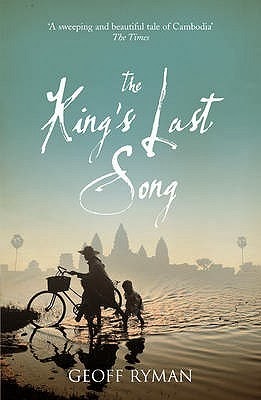
The King's Last Song, by Geoff Ryman

I just finished The King's Last Song by Geoff Ryman, which I read while in the throes of a head-poundingly miserable virus. This left me in awe not only of Ryman's breathtaking talent but my own ability, even when reading about centuries of war and almost unimaginable human suffering, to maintain a really impressive level of self-pity. I mean, sure, millions of Cambodian people lack the basic necessities of life and have lost family members and the situation is horrifying, but I feel like I have spikes being driven into my ears, I've pulled every muscle in my torso coughing, and I am a dictionary, nay, a veritable encyclopedia of snot. It's all about my pain, people.

I've only ever written (e-mailed) three fan letters, and they've all been to fantasy writers. My husband says he always wants to meet people he admires, because he has this fantasy that he'll be able to come up with something witty and brilliant to say that will impress them and make him memorable. The only time I've ever handed an author I loved a book to be autographed, I just stood there beaming like a slightly backward three-year-old after one too many trips to the sundae bar until she cleared her throat politely and said "um... what's your name?"

Anyway, one of my fan letters was to Geoff Ryman for his book The Child Garden, which was amazing -- one of the few books that made me feel like I'd truly never read anything like this before. He wrote back and was very gracious (all three of them were). Unfortunately (for me) I didn't love his next few books as much. Still, one of the things I admired about him was how he could differ in style and approach so much from book to book -- he's the furthest thing you can find from a formulaic writer. The Child Garden was fantasy -- subversive and thought-provoking fantasy, dealing with themes of social engineering, thought control and repression, among others. The King's Last Song moves between fiction and historical fiction. The modern narrative deals with the archaeological discovery of an ancient book written on gold leaves at Angkor Wat. Luc Andrade, a professor who grew up in Cambodia, is kidnapped along with the book. William, Andrade's motoboy, guide and friend, and Map, an ex-Khmer Rouge member, are two of the men involved in the attempt to rescue Andrade and the book. The other narrative is the story of Jayavarman VII, the Buddhist King who ruled Cambodia in the twelfth century.

Usually when a book alternates narratives, especially one in the present with one in the distant past, I find myself rushing through one of them in order to get back to the other. I didn't feel that way in the least with this book -- both stories are equally riveting, and wrenching. Perhaps Ryman's greatest strength is his characterization. His characters are so fully realized, so nuanced and multi-dimensional, that you can almost see them right in front of you. There are no types here -- good people commit unthinkable atrocities, and evil men are capable of amazing feats of generosity. Ryman also evokes Cambodia vividly, its heat and beauty and poverty and desperation.

I've heard that connecting something you're learning with a strong emotion makes it much more likely that you'll retain it. I feel as if the events and characters in this book are burned into my mind permanently. Luc Andrade, the French professor who grew up in Cambodia -- he's taken prisoner, held hostage and in fear for his life, and he still cares more about the people of Cambodia and protecting the book than he does about himself. William, the touchingly earnest motoboy who keeps files on everyone he meets in order to learn from them, who "buys fruit and offers you some, relying on your goodness to pay him back. When you do, he looks not only pleased, but justified." Map, who confronts every situation with a frightening zeal and hilarity, who acts with the single-minded fearlessness of someone who has nothing at all left to lose. Jayavarman, the prince who becomes a slave and then a King, a rare King who thinks about the lives and needs of all of his people. Jayarajadevi, his first wife, wise and enlightened but tormented by the need to accept the second wife he brings home from his period of enslavement. Rajapati, the king's son, born with twisted legs and struggling to temper his bitterness by finding a way to be useful.
Nothing happens the way you expect it to in this book, which I guess is also one of the themes. At one point it says that 1985 was the worst year of Map's life, and then a number of good things happen, which naturally you read with a sick feeling of foreboding because clearly something horrifying is coming. The Khmers Rouges committed unthinkable atrocities, and yet many of them were just poor, uneducated young boys who joined the army out of desperation or ignorance. The book is full of searing moments of honesty and unlikely friendships that make small redemptions seem possible, in the midst of despair, which seems the very best one can hope for (for which one can hope?) It is a passionate, eloquent, moving, disturbing story. I am now going to buy a copy (I got it from the library) and obnoxiously demand that everyone I know read it.

Thursday, April 16, 2009

But who will take care of us when Daddy's in the hoosegow?

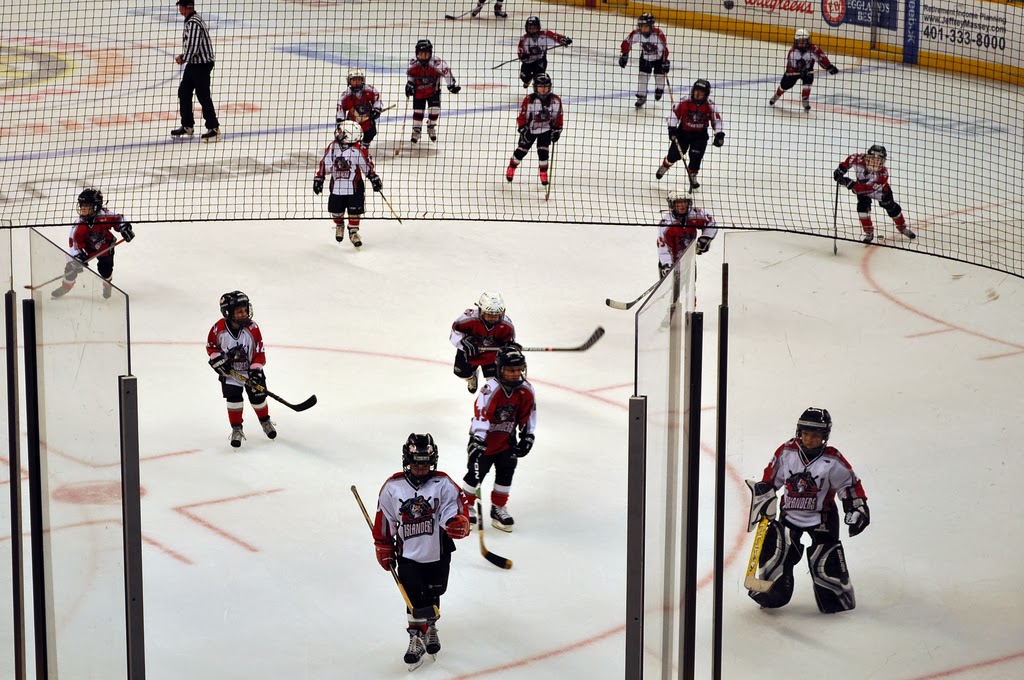
So my husband brought me this form that I have to sign in order to register Eve for hockey. Yes, the man I married has decreed that the child who ranks skating as an activity slightly less enjoyable than bleeding from the eyes, will be playing hockey in the fall.

The first item in a list of parental good conduct rules states "I will not force my child to participate in hockey".

???????????????????

Obviously I thought he was asking me to sign it because he couldn't. But there was his signature, in all its treacherous glory.

There you have it. My spouse, he of the flaming trousers of the Liar Liar variety, has committed fraud on official paperwork.

Is that the pounding of truncheons on the door?

Saturday, April 11, 2009

Don't bother reading this.

I have low self-esteem. There's no really good reason for it. I had great parents and a perfectly fine childhood (apart from the low self-esteem thing). Nothing deep and dark and traumatic has happened to me. I haven't spent years with anybody telling me I'm ugly and worthless and unlovable (nobody apart from me, anyway). So I have no good excuse for my low self-esteem, which naturally only makes me feel worse about it.
One of the blessings of getting older is that I understand more about myself. One of the frustrations of getting older is that I understand many things about myself without seeming to be able to actually change them a whole lot. Intellectually I know that I'm intelligent and friendly and average-looking. I know that when I go out in public and I feel so ugly that I have trouble meeting anyone's eyes, that's my own personal weirdness, not objective reality.
It took me years to start blogging, even when I knew I would really like it, because I couldn't believe that my opinion was worth anything. Then I decided not to care. Low self-esteem is not attractive. At the Oscars, Katherine Heigl came out to present an award, looking ludicrously beautiful, but the first thing she said was "Forgive me, I'm unbelievably nervous. I'm not very good at this". Did I feel sympathy? Empathy? I did not. I thought, "oh honey, you're a movie star, you're hot, you're at the Oscars, no one wants to hear about your issues." Even though I'm the opposite of a movie star (today I found a plastic grocery bag tied up on the stairs and when i opened it there was a pair of boys' sports socks that smelled like shit. I thought about investigating, but I decided to just throw them out and never speak of it again. Except for now), I figure the same is probably true with me. So I'm trying to show improvement in that area.
I belong to an on-line dvd service, from which I keep telling myself I'm going to unsubscribe, because it's really not worth the money, but I can't quite do it because they send me movies! in the mail! It's like Christmas every time I get one. And it means I get cool obscure foreign films and cheesy horror movies that I would be too embarrassed to rent from the video store, plus it all happens without my having to talk to anyone! I also joined one of those websites that lets you list and rate all the books you've read, simply because the other day my kids started out by asking me when I started liking reading so much and ended up by saying "you must have read a thousand books!" and I got curious about how many books I actually have read. Finding this website was a very bad thing of course, because it's scary addictive, and I end up sitting there for hours thinking "oh, and what was that one by the Swedish guy, with the outhouse thing and the... oh, something about a girl. I'll just type in 'girl' and see how many titles they come up with. Twenty five thousand and seventy-eight? No problem, I have some time before I have to start dinner."

Anyway, both of these websites have the five-star system for rating movies and books. I would sit there agonizing over how to rate them -- well, the plot was good but the characterization was a little weak. The writing was spectacular, hated the ending. It was entertaining, but was it a really valuable addition to the canon? Then, totally by accident, while I was scrolling over the stars, I saw that each star is tagged with a phrase. Something like: one star = I didn't like it, two stars = it was okay, three stars = I liked it, four stars = I really liked it, five stars = it was amazing. And I had a tiny epiphany; it's not about how objectively good the movie or book is. It's about how much I liked it. It's about how it moved me, or not. My taste is eclectic and quirky, and people looking for recommendations might as well know that. And now I'm giddy with power, throwing around four or five star ratings with gay abandon, because screw you if you think the coincidences were unbelievable or that Mormons don't really behave that way or you didn't like the leading lady's nose -- this is my list. And my opinion is just as good as anyone else's. (And better than some -- four stars for Maeve Binchy? puh-lease!)

Saturday, April 4, 2009

Everyone has their game, right?

Angus and Eve just got home from baseball sort-outs. They don't have to try out, because everyone who wants to play gets to play, but they put them through some throwing and hitting trials just to make sure the teams are 'balanced'. As you may remember, Matt decided Eve should take skating lessons this winter, which was a constant source of grief and vituperation. Being the well-organized family we are, we didn't actually realize the last skating lesson was the last skating lesson until it was over. When we told her there was no more skating this year there was much rejoicing. Then Matt told her next year she'd be... playing hockey. She said "that sort of spoils my perfection". Then she said "how can I play hockey? I'm the slowest skater in the whole place! Even the kids who fall down pass me!" This is because the kids who fall down, fall down because they lift up their feet and glide, rather than taking a thousand precise, miniscule steps that mean you probably won't fall, but make crossing the rink an hour-long enterprise.
So she got home from baseball and I asked her how it went and she said....


"I smoked it like a big bowl of fire."
Go Baby go.

Monday, March 30, 2009

Hit him with your stick!

I have one sister and no brothers. We took figure skating, dance and brownies, and I played the piano. I have vague memories of a skating pageant where I was in one of two lines of little girls who skated up on either side of our skating teacher who was dressed like a princess, and when she lifted her head up to skate her solo I was surprised at how much makeup she was wearing. Her lipstick was thick and sparkly, and in retrospect this seems kind of gross to me, but since I was six I probably thought it was beautiful. I also remember a dance number where all the mothers were going nuts trying to scotch tape everyone's bunny ears upright.
So my family as a whole was completely unversed in the niceties of the out-of-town hockey tournament. That has now all changed. Somewhat.
photo credit
creative commons license

As far as I can tell, the experience consists of a welter of mind-numbing logistics and frenetic activity alternating with periods of absolute boredom OR bacchanalian debauchery. In other words, I'm pretty much a fan.
Most of Friday was ludicrous and irritating. Matt was taking the red-eye home from California and was arriving at about noon, which would have gotten us to Kingston for the two o'clock game, but not for one o'clock which was when the coach wanted the team there. So we sent Angus ahead with the coach. We made my parents come with us, because they never had to before, and it seemed like it was time. Also, they travel with a full range of healthy food, plus a wide range of liquor. So we all arrived in Kingston for the first game, which we lost rather badly, resulting in a meltdown of a small-scale nuclear degree by Angus, so we decided to go check into the hotel before the next game instead of going to eat with the team.
But the hotel was in Belleville. This means we drove forty-five minutes to check into the hotel, giving Angus and Matt about forty-five more minutes before they had to head back to Kingston for the next game. What's that beer commercial that says if you're Canadian chances are you've driven two hours for nineteen minutes of ice time? We are so freakin' Canadian. So my parents and Eve and I got some dinner and went in search of the next arena. We had directions, but there was one right turn that should have been a left turn. We saw some nice farmland. We got to the game a little late, but they tied, and we got to see a great "we didn't lose!" celebration on the part of both teams. Then we went back to the hotel, got the kids bathed and in bed with the tv on and that's when I realized.... I'm in a hotel room in Belleville, with people I like and a bunch of drinks. And our next game isn't until seven o'clock tomorrow night.
Saturday wasn't even a little bit annoying. We shopped and drank and walked to the waterfront in Kingston and Eve lost her second front tooth at the Keg. The game was incredibly exciting, the kids played their butts off, and we were SO CLOSE to winning... and the other team tied it up with about three seconds left. So then we went back to the hotel and contravened the waiver the hotel had made us sign in about seven different ways. You know when you're at a hotel and there are a bunch of kids running around in the hall being loud and it's really annoying? My kid was one of those kids! Well, a little. At one point there were about ten kids in the room and I told them if they didn't start using their inside voices they were going to get in trouble and we'd all have to go to bed. When the next kid came into the room, Angus said "you're too late, we just started using our inside voices". Actually, the kids didn't get into trouble at all (the adults were another story).

Angus is generally pretty quiet and timid. He lives in his head a lot, and he has that same agonizing self-consciousness I had (still do, really). I feel such a sense of joy when he forgets himself a little and acts like... well, like a boy. A loud, oafish, slightly obnoxious, silly boy. I personally don't see the attraction in hanging off someone in the pool while trying to remove his swim trunks, or flinging myself from one hotel bed to the other while trying not to get my head squashed by the six other boys doing the same, but that's just me.
I'm not a great hockey Mom. I don't like getting up at five o'clock in the morning to get to the rink. I don't like the back-breaking hard benches, and my hands are too weak to tie skates tightly enough. I wouldn't have thought I would have a lot in common with a bunch of other hockey parents. Somehow being crowded in a hotel room together passing around beers, reliving the almost-glory and figuring out whose kid is whose is a great leveller. I came home filled with love for all humankind.
But they really should have called that last off-side. Not that I even know what that is.

Wednesday, March 18, 2009

In which I forget to review the actual book.

I had one of those meaningless-but-cool things happen, where after one of my last posts a friend mentioned reading The Road by Cormac McCarthy, and I had just picked it up at the library the day before, so I figured that was a sure sign that I should read it. Right away, I mean, as opposed to shuffling it somewhere into the dangerous, teetering triple pile of books on my bedside table and then renewing it the maximum number of times allowed and finally having to read it against a deadline because I'm trying not to singlehandedly subsidize the Ottawa Public Library this year.

So anyway... The Road. I said my friend mentioned reading it, because you couldn't properly say she recommended it, which kind of makes sense. There are books where it seems ludicrous to say "I loved it" even when you feel glad you read it. It got me thinking about what I'm looking for when I read, which you might think I should have done before considering how much of my life I spend doing it, but hey, ask an addict why he's doing that heroin and see how lucid and well-thought-out an answer you get.

Finding out things you didn't know. That's an easy and obvious one. It seems incredibly decadent to me that if I want to know about how vaccines were developed, or what eighteenth century London was like, or if Robert A. Heinlein really was a big old fascist bastard, all I have to do is type in keyword in subject and away we go. I can lay my hands on any number of informative and surprising facts; unfortunately I don't seem able to remember most of them for more than a day or two, but if you catch me in that forty-eight-hour period I'm a veritable font of genius. Of course, if you'd like to talk about something other than the debatable merits of deliberately infecting oneself with cowpox, you might find me a little annoying that day.

Sharing someone else's mind space. It's such a brave act, publishing something, isn't it? In Zadie Smith's On Beauty, there's a quote about the main character being shaken by another man's appearance: "This second fellow had such lucent white skin and so prominent a plate of bone in his forehead that Howard felt oppressed by the sheer mortality of the man. Never had another living being shown him this much skull". That's often how I feel when reading a really great book where the author's little beating heart seems to glow right through.

Wallowing in envy of great writing. I discovered Michael Ondaatje in university. I've since become slightly more ambivalent about his books as stories, but man, no one can wallop you with the sheer force of his imagery like M.O. I remember a scene about someone having to go into freezing cold water to rescue a cow, and you could have sworn that this man had actually stuck his head under water in February and then come up with words that not only described it but actually made you feel it -- that numbing ache behind the eyeball. I love that feeling, when the same words that I use every day, often to indifferent effect, suddenly combine in a way that takes away my breath or renders me completely weightless for a moment.

Living in another world. Sometimes for escape, sometimes to bear witness, sometimes for the sheer admiration of the fact that someone can create one. I've tried writing fiction -- straight fiction, no genre attached. It's not pretty. Even if I manage to create minimally credible characters, I can't seem to manage to get them from the kitchen to the living room without making them seem like talking radishes. When someone can make a world that I can live in without constantly being aware that I'm 'reading a book', then they deserve my royalties. Or the library's royalties. Or something.

Trying to reach the literary tipping point. I'm convinced that at some point, when I finish the last word of the last sentence of a certain book, I will suddenly be replete with wisdom and talent, at which point I will either know everything or be able to write a great masterpiece, or possibly my ass will just become rock hard. Either way, it's going to be good.

Saturday, March 14, 2009

Excuse me while I conspicuously consume this space.


Eve and I went to the mall on Thursday. I had bought jeans for Angus at Old Navy on Wednesday and they were too tight (ended up exchanging them for ones that were too big -- I know this is tangential, but WHY is there only 'slim' and 'husky' with nothing in between? But also, adjustable waistbands rock) and we were looking at a rather drastic pants shortage. We exchanged the jeans and had lunch in the food court, and practiced getting on the escalator, and it was lovely. But I also caved in and bought her a little Disney Princess doll. And this is why I can't 'go shopping'.

I don't really get 'going shopping'. In university, I had friends that would just drive around on the week-ends looking for different places to walk around buying stuff. When I shop, it's a hard-target search, get in, get what you need, get out. Because as long as I don't see stuff, I don't want it. When I'm out where all the stuff is, I end up buying stuff I don't need. I know not everybody is as weak and easily distracted by bright shiny objects; but I personally think I would benefit from fewer shopping hours and maybe having to answer a skill-testing question before being allowed to buy another t-shirt or candle-holder.
photo credit
creative commons license

When I was a kid, there was no Sunday shopping and no evening shopping except on Thursday and Friday. Obviously this was inconvenient for a lot of people, and extended shopping hours are helpful in a lot of ways, especially for groceries. But with so many people talking about 'simplifying' and 'de-cluttering', and the glaring imbalance in lifestyles between our society and others, doesn't it seem a bit -- I don't know -- unnecessary, unhelpful, something like that -- that we place so much emphasis on shopping that we have to be able to do it whenever, wherever?

I end up with a headache every time I try to buy toothpaste. The toothpaste aisle seems to denote the very essence of first world decadence and self-indulgence. Because Jesus, how many different kinds of toothpaste can there be? Whitening, freshening, bubbling, bursting, scouring, cinnamon, freshmint, gel mint, vanilla mint... it's enough to make you yearn for the days when they just chewed on a splintered twig after they ate their bannock and bear grease.
photo credit
creative commons license

I just flipped through my copy of The Poisonwood Bible by Barbara Kingsolver looking for this quote, but I can't find it. The book is about a Baptist minister who takes his four daughters and his wife to the Belgian Congo in 1959, and the effects it has on their lives. One of the girls marries a Congolese revolutionary and has four sons. On one occasion she brings them home to Georgia and takes one of them to the supermarket. When he's staggered by the amount and variety of goods on display, she tells him Americans have a lot of things they don't need, and he says "But Mama, how can there be so many kinds of things people don't need?" I think of this every time I try to buy toothpaste.

I know, I know; we live in a capitalist society, supply and demand, blah blah blah. It's up to me to learn to buy only what we need, to teach my children that new is not always better, to cut down on waste. And not only because we don't have space for any more bookshelves.

The Other Most Wonderful Time of the Year

  I use ice in my drinks. Like, a lot of ice. And by drinks I mean mainly water, which is what I drink most of the time. I think it was afte...